A practical guide to short, personal conversations inside normal family routines, even with children playing in the next room.
Get the digital guide · $35Instant download · Secure checkout by Whop

You probably think you need hours of quiet time alone to feel close again. You wait for the kids to sleep, but when bedtime finishes, you have nothing left. You sit side by side on the couch, staring at screens.
This is not your fault. Most advice says closeness needs date nights and weekends away. But waiting for rare quiet moments in a busy home means personal conversation keeps getting pushed to "later".
So you run meals, laundry and school schedules like a great team, and still miss the person you chose.
Closeness does not require an empty house. It can happen in the small spaces you already have: drying dishes, in the car, while the pasta boils.
This guide shows you how to move from logistics to something personal in a brief exchange, how to share without your partner jumping to advice, and how to pause when a child interrupts without losing the moment.
The goal is simple and concrete: three completed personal conversations in seven days. No babysitter, no cleared calendar.
You coordinate family logistics like clockwork, but miss talking about anything other than bills, meals and school schedules.
By the time the kids are asleep, there is no energy left for deep talks or late-night dates.
You want closeness now, but don't have nearby family or spare money for weekly babysitters.
Notice small openings in your evening and check whether both of you can actually pay attention, even for a minute.
Pick something personal that is fine to say with children around, and move into it without dropping the task you're in.
Three simple steps for the listener: pause, ask one question, acknowledge. Before any advice.
What to do when a child interrupts, so the moment isn't lost and you know where to pick it back up.
Spot a short gap during daily tasks like cooking or folding laundry. No quiet room needed.
Say one personal thought from your day, without starting a long, heavy discussion.
The listener pauses, asks one question and acknowledges, instead of rushing to fix it.
When a child calls, hold the thought so you can pick up the same thread later.
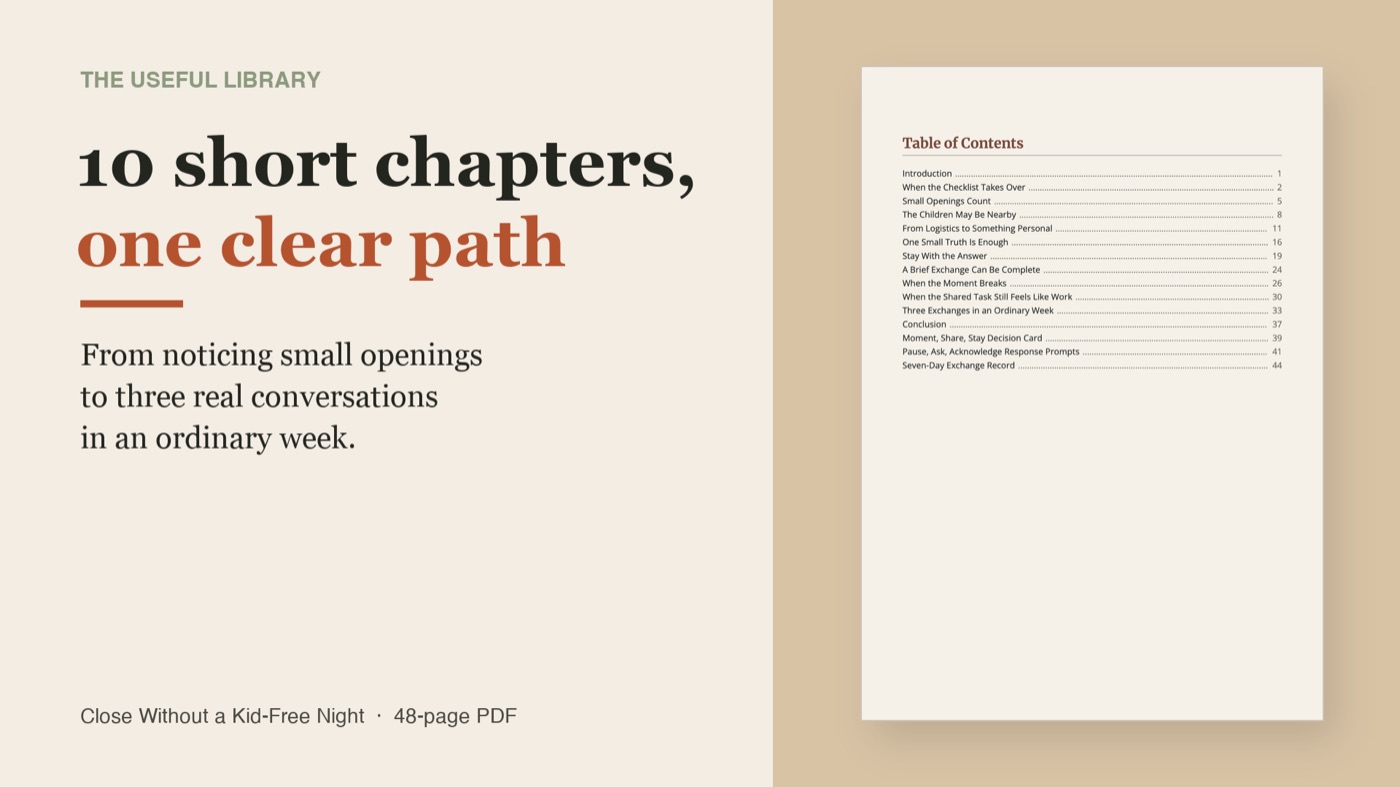
The table of contents
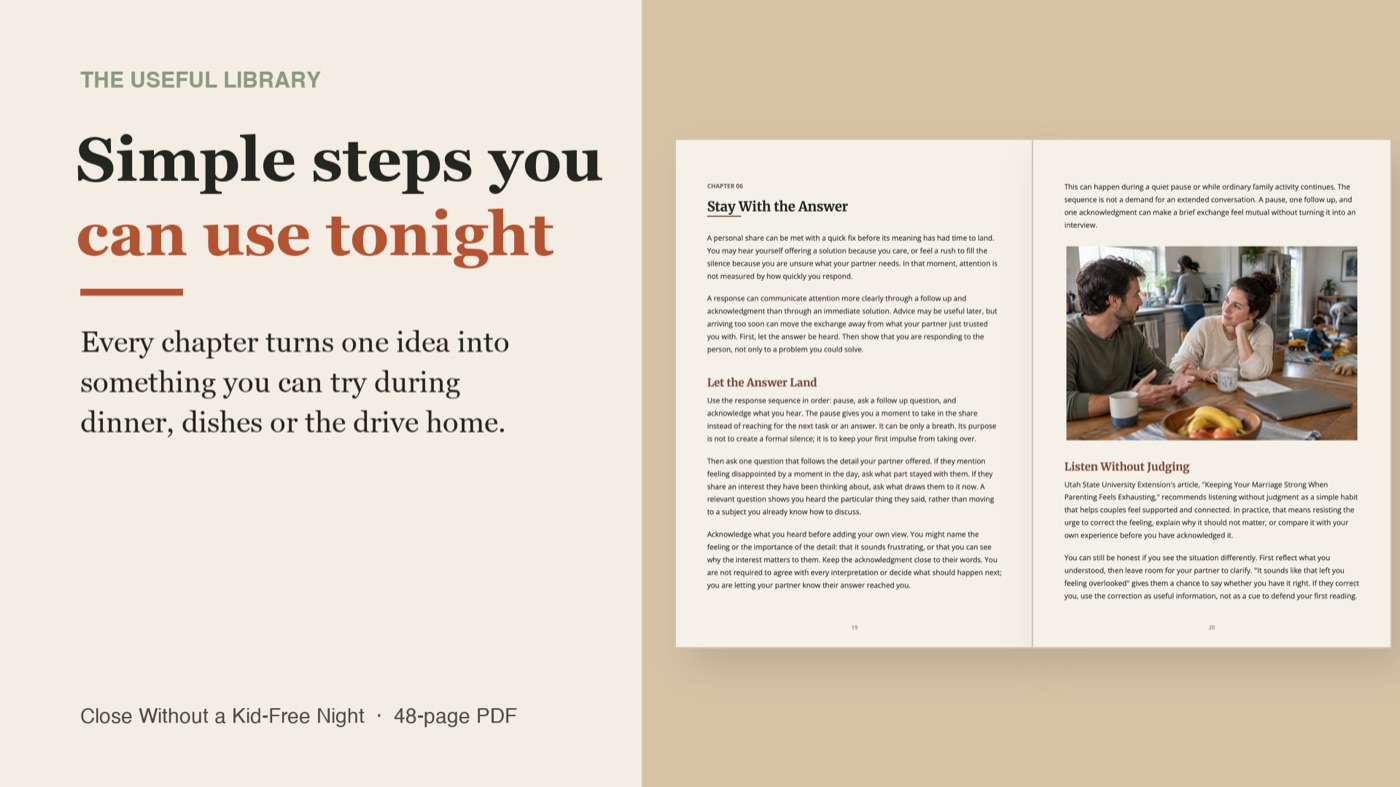
Inside a chapter
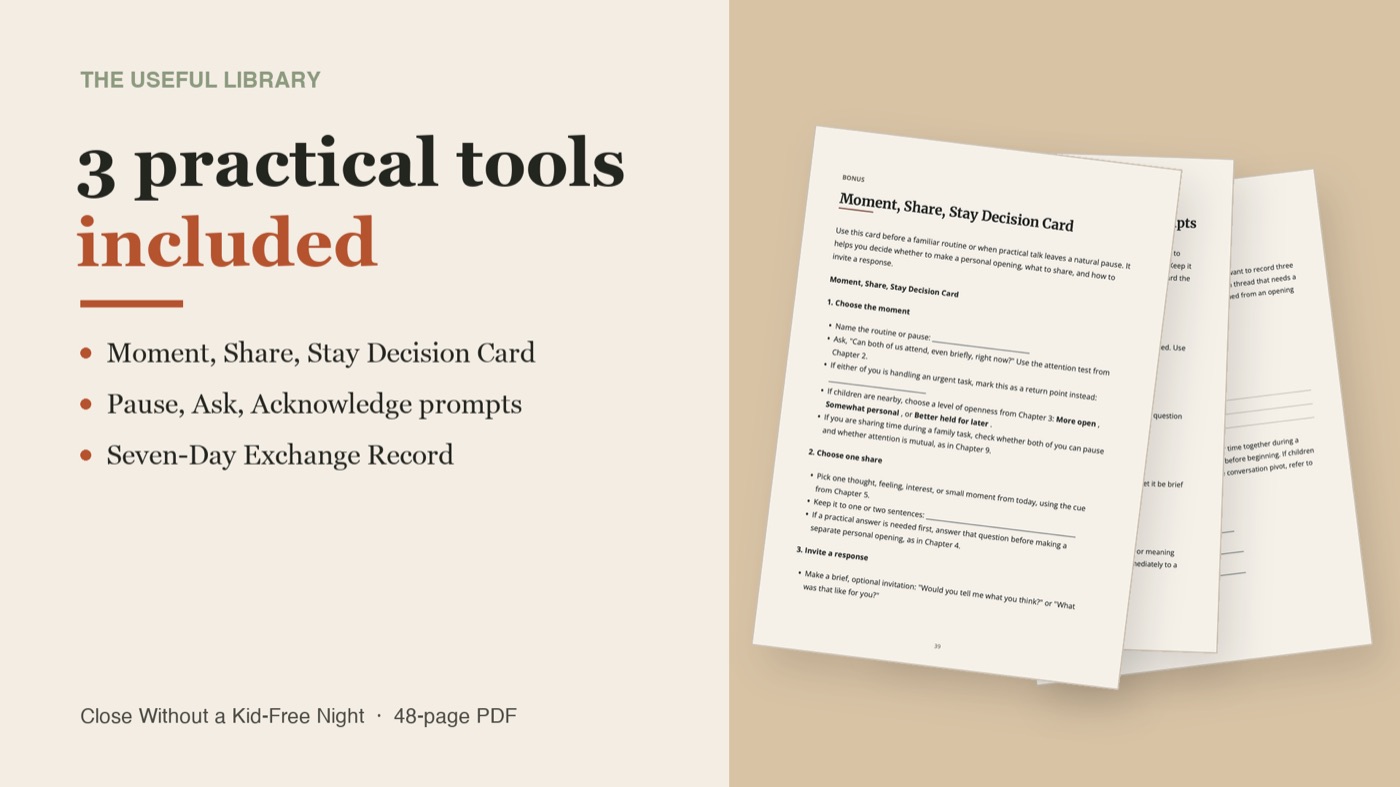
The three tools at the back of the book
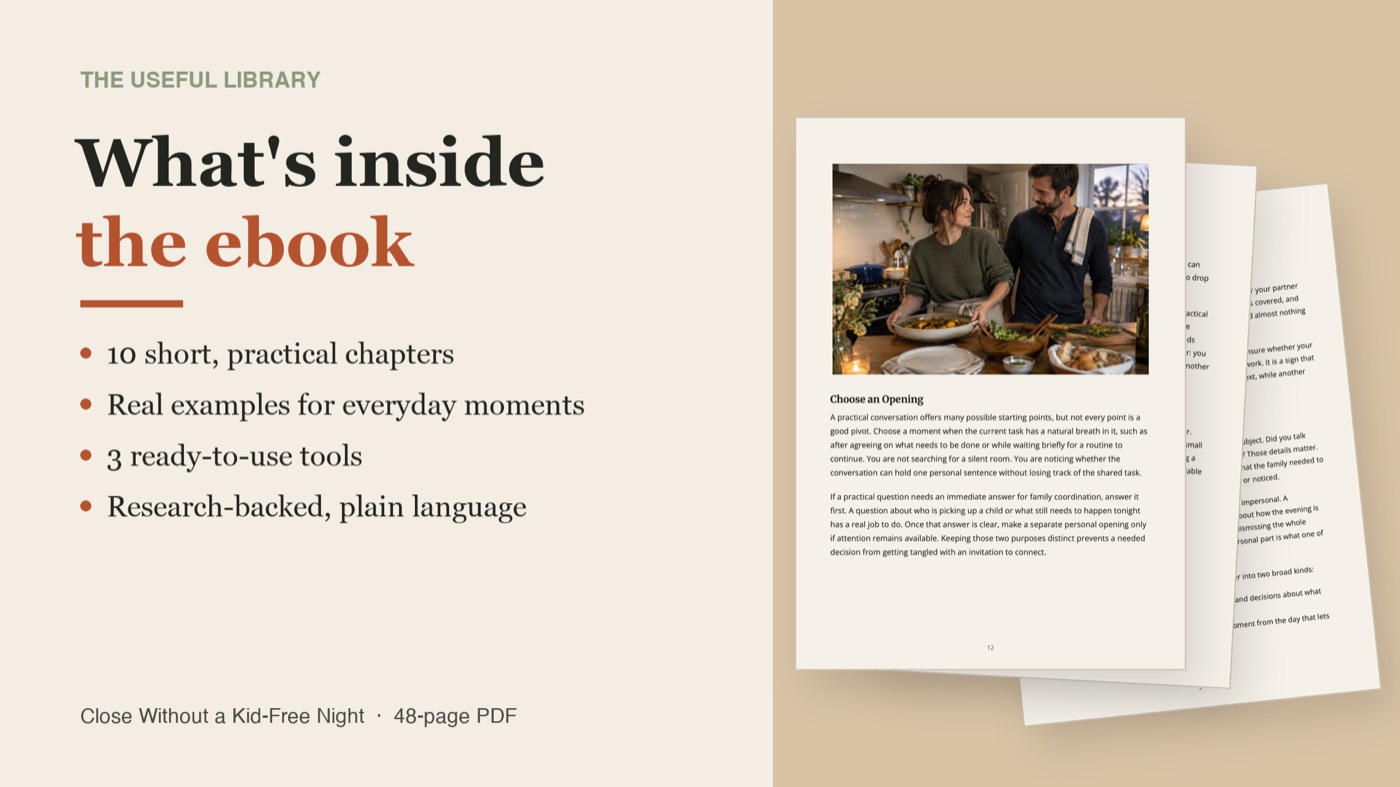
What's inside
This is not therapy. It won't solve every problem in a relationship, and it won't make family life less busy.
What it gives you is a practical way to build closeness through brief exchanges, without waiting for a quiet house that may not come for years.
A babysitter plus dinner out can easily cost more than this, and you still might end up talking about the calendar.
Instant download · Secure checkout by Whop
Dinner, toys, bedtime. You tell yourselves you'll really talk this weekend. The weekend fills with errands. Another week of coordinating everything and learning almost nothing about how the other is doing.
Dinner is on the stove. You share one small personal thought. Your partner looks up and asks one question. A child interrupts, and you both know where to pick it back up later.
No. There are no hour-long exercises or late-night talks. The exchanges are brief and fit into things you already do, like washing dishes or driving.
They don't have to. One person can start using the approach. Your partner simply responds to a normal conversation, without feeling like they're doing homework.
It was written for exactly that. It doesn't need silence or a private room, and it covers what to do when a child interrupts.
The focus is small. No therapy games or scripted interviews: just moving from a logistics comment to one personal moment.
That's what the listening steps are for. Pause, ask one question, acknowledge, before any advice, so the person sharing can simply be heard.
No. It's a practical guide for everyday conversation. It doesn't replace professional help if your relationship needs it.
Instant access to the 48-page ebook in PDF and EPUB, with the three tools at the back.
 The Useful Library