Work out a monthly card payment you can actually keep, after rent, food, bills and seasonal costs are covered, so groceries don't end up back on the card.
Get instant access · $29.9932-page PDF · Instant download · Secure checkout by Whop
You check your account right after paying rent. It looks like there's room, so you send a big payment to the card. But food, electricity, fuel and every card minimum still come out of that same balance. By week two, the cash is gone.
This isn't a discipline problem. A lot of debt advice says to throw every spare dollar at high-interest cards, as if household costs never changed. On one income, that can leave you short, and the card comes back out at the grocery checkout.
Then there are the bills that don't arrive every month: car repairs, school costs, annual renewals. When a plan ignores them, an ordinary bill feels like an emergency, and it goes on the card too.
This book changes the order of operations. Instead of guessing what you can spare, you protect food, utilities, transport and upcoming seasonal costs first. Only what's left after that, and after every card minimum, goes toward the debt.
It uses numbers from your real months, not one unusually cheap month, so the payment you choose is one you can repeat.
The aim is a realistic plan based on your household's actual cash flow. Not a payoff date promise.
Your income covers the household and you need to reduce card debt without risking food or utility money.
You send large payments, then swipe again for groceries or car repairs before the next payday.
You want a clear, repeatable payment figure without complex spreadsheets or unrealistic cuts.
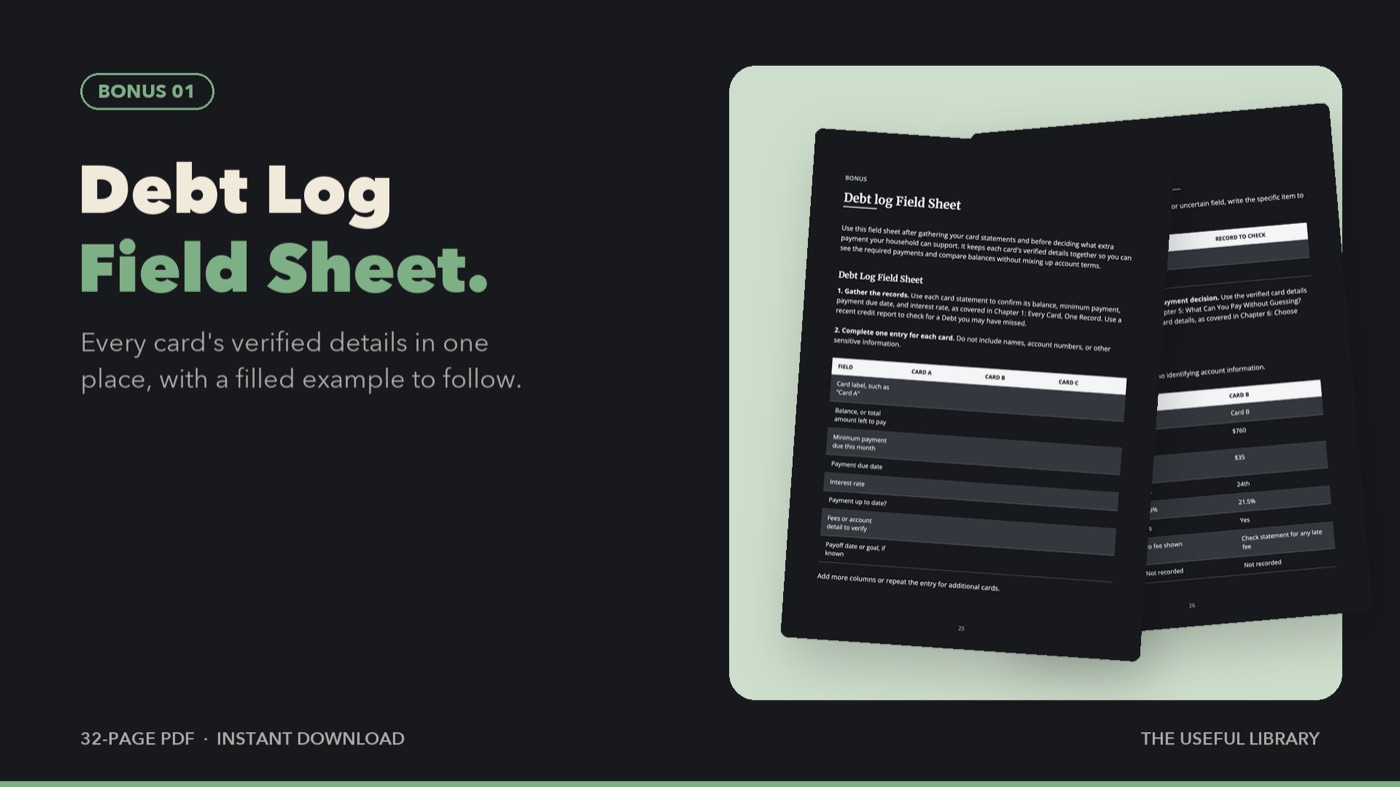
Balances, interest rates, minimums and due dates, all in one place, so you stop guessing what you owe.
Look at what your household actually spends, not what you hope it spends.
Rent, food, utilities and transport are covered before any extra payment is considered.
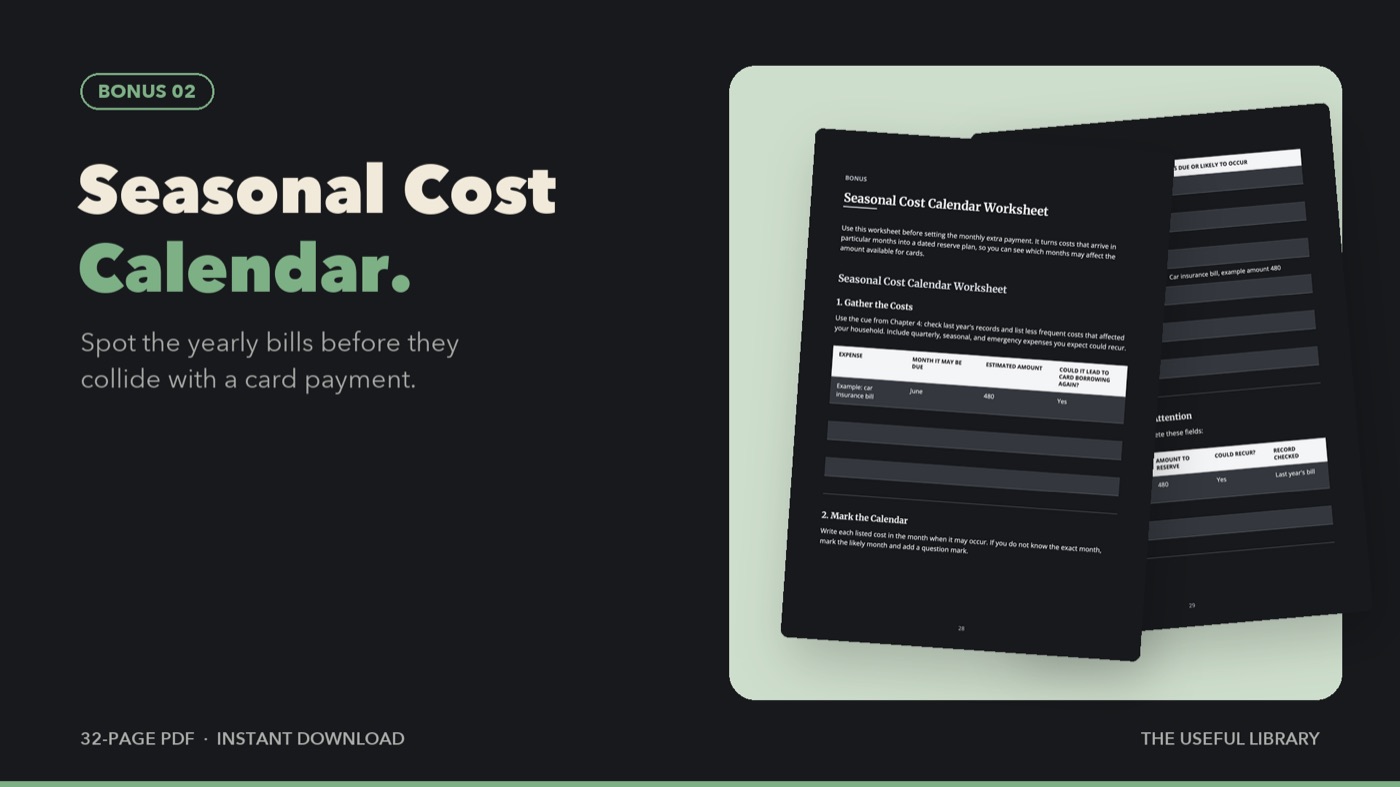
Map the costs that don't come every month and set aside a little in normal months.
Pay every minimum, then send what's truly left to one card, by highest interest rate or smallest balance.
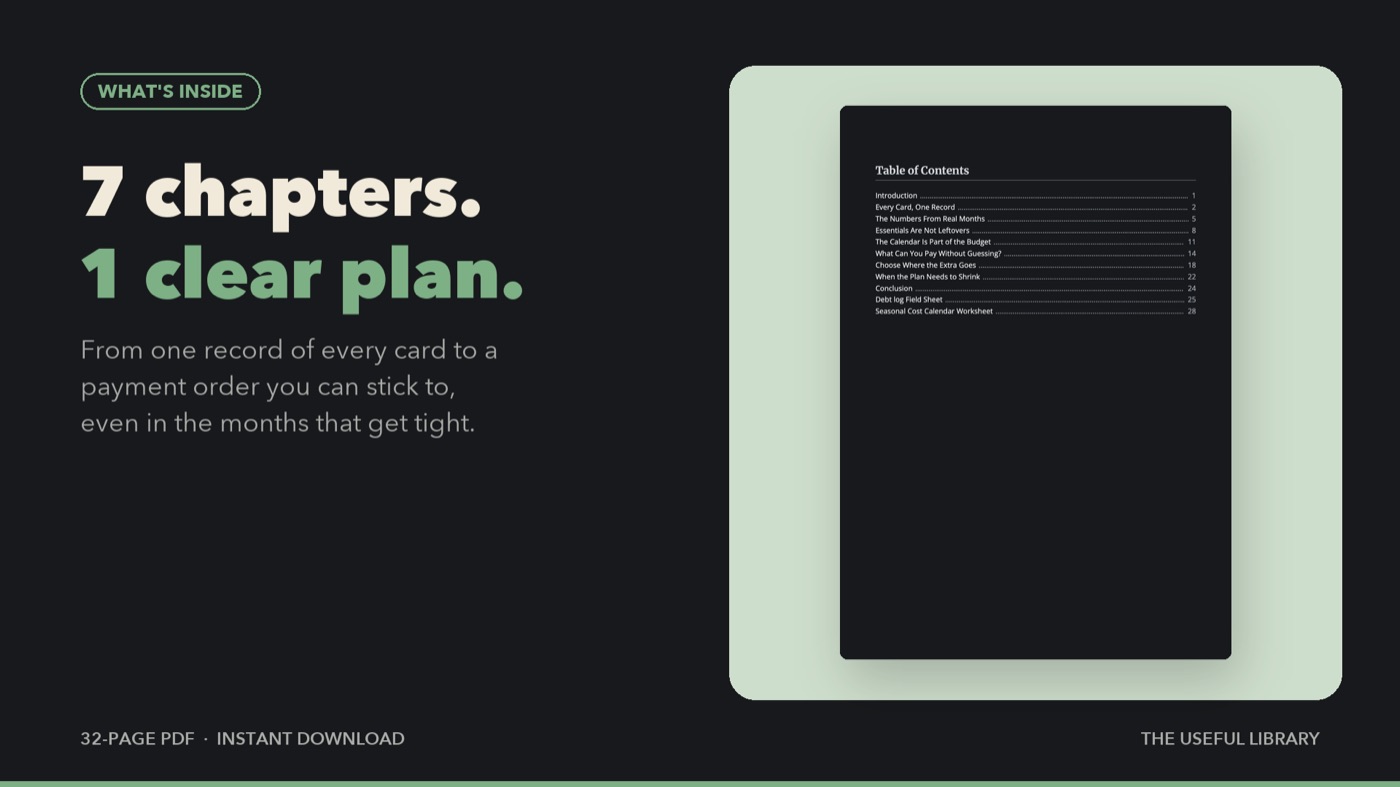
Seven chapters, in the order you use them
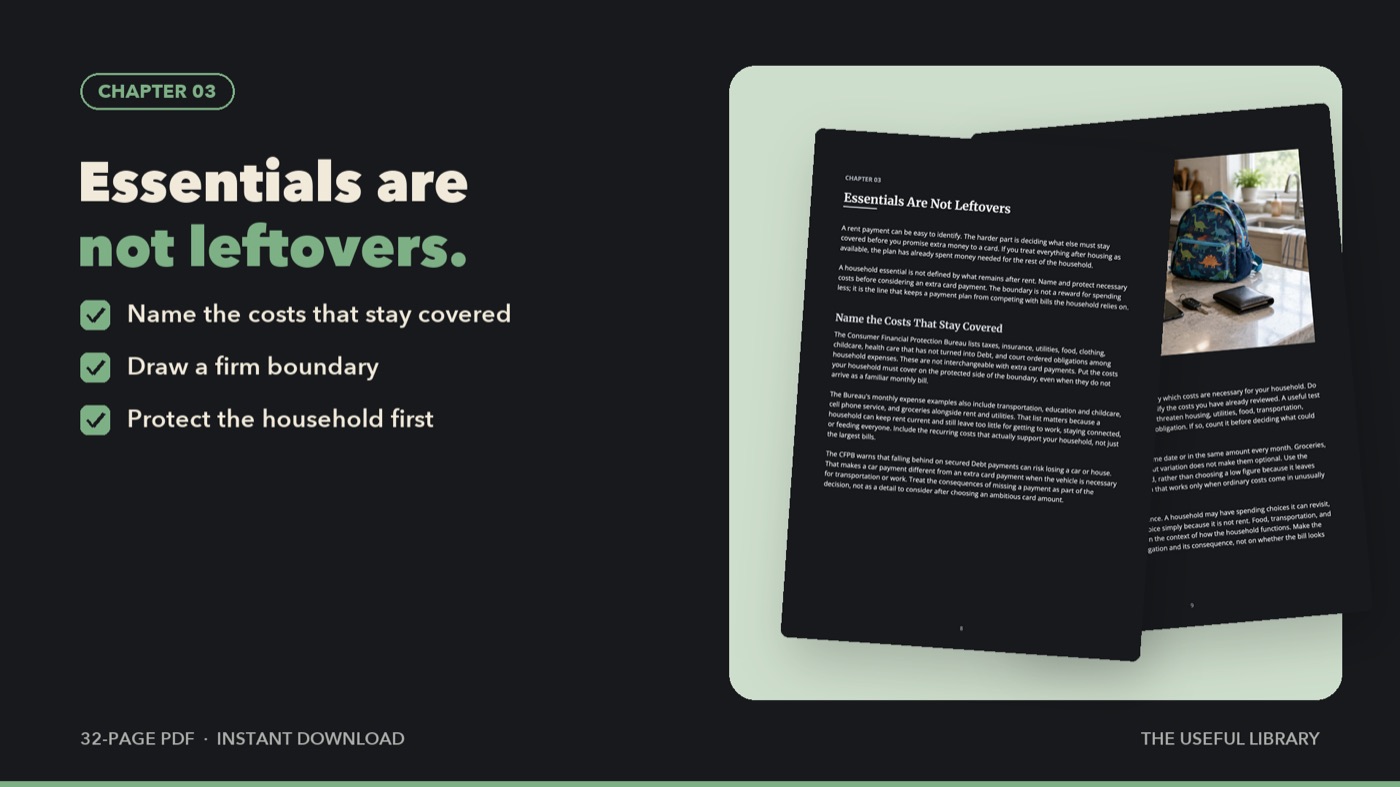
Essentials are not leftovers
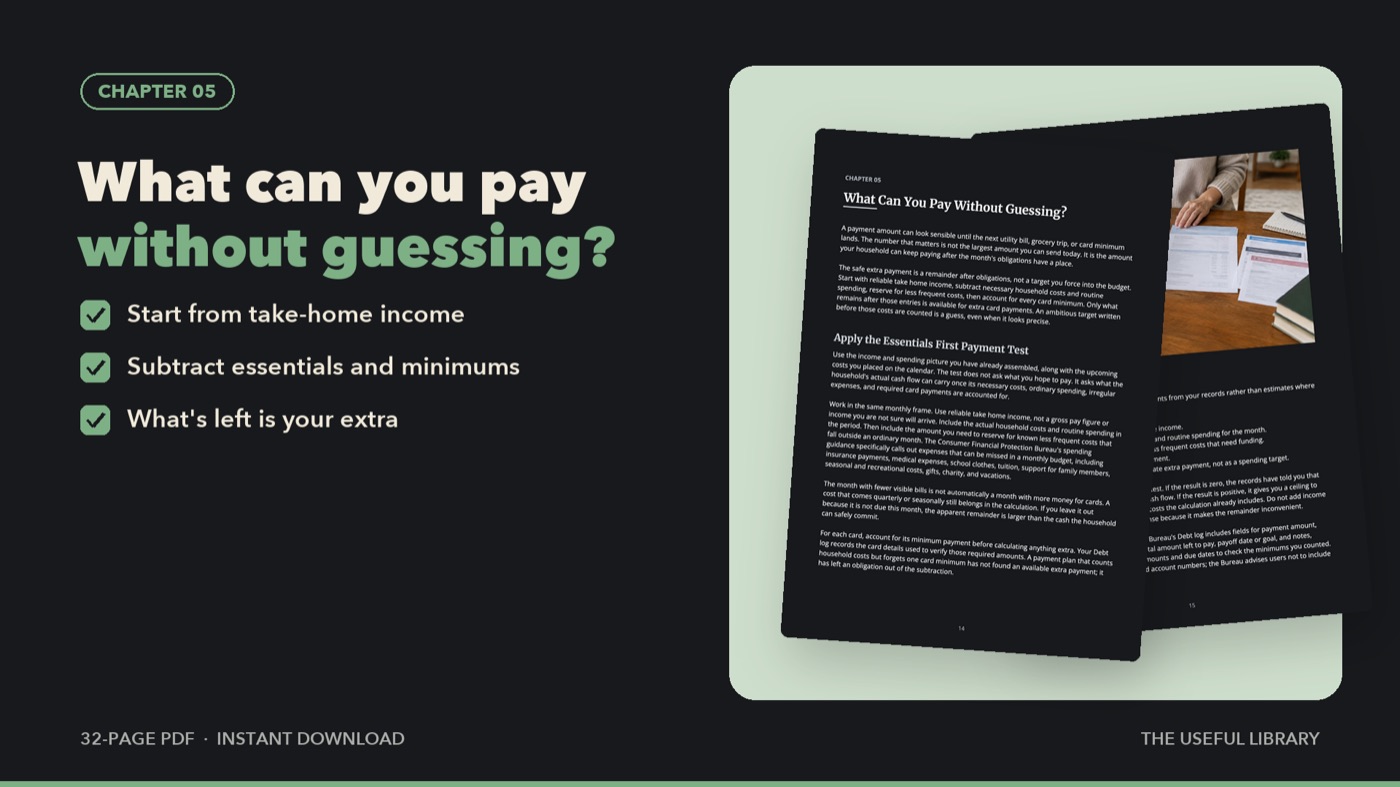
What can you pay without guessing?
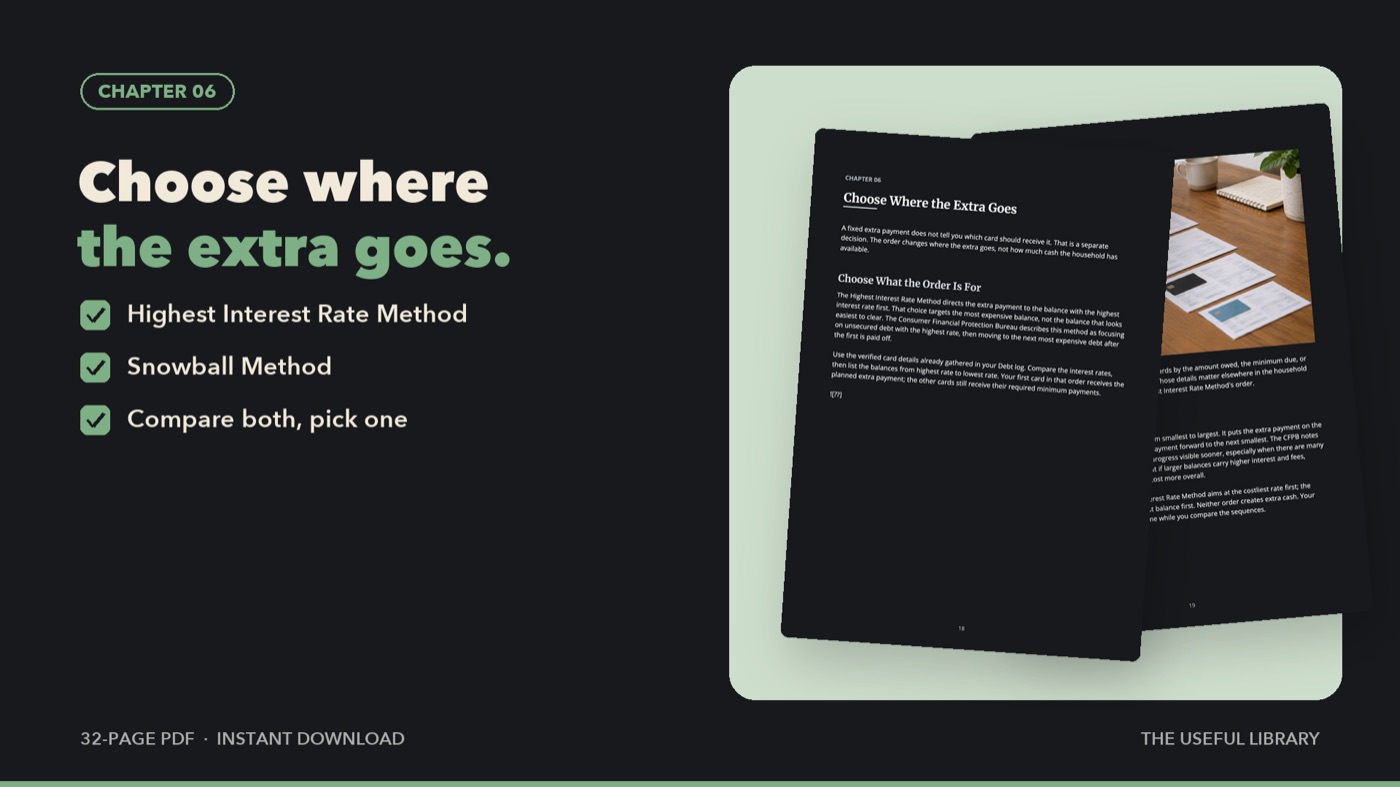
Choose where the extra goes
Rent is paid, the rest looks spare, a big payment goes to the card. Ten days later a higher bill arrives, the pantry runs low, and groceries go back on the same card.
Essentials, minimums and a small seasonal reserve are set aside first. The extra payment is smaller, but it's one you don't have to borrow back.
Instant download · Secure checkout by Whop
No payoff-date promises. How fast balances go down depends on your income, costs and rates. This book helps you choose a payment that doesn't put your essentials at risk.
Not financial advice. It's general, practical guidance. If you're behind on payments or facing collections, consider talking to a nonprofit credit counselor.
Yes, it's written for tight budgets. Extra money only goes to the cards after essentials and minimums are covered. If the honest answer this month is "minimums only", knowing that still protects you from new debt.
That's why it uses real months and a seasonal calendar. You plan for the bumps ahead of time instead of being surprised by them.
A payment you have to borrow back doesn't reduce anything. A smaller payment you can keep lowers the balance month after month.
The book compares two common ways: highest interest rate first, or smallest balance first, and helps you choose what fits you.
No. It doesn't ask you to cut basic needs. It works with the income you already have.
No. It's a practical guide, not personalized financial, legal or tax advice.
Instantly after checkout, as a PDF you can read on any phone, tablet or computer.
 The Useful Library